Series SLEX-100 HI-LED & REX-100 HI-LED |
|||||||||||||||||||||||||||||||||||||||||||||||||||||||||||||||||||||
Overview
The fixture can also serve as an illumination port paired with a separate viewing sightglass (e.g., for TV/video camera use). Key Features & Benefits Technical Specifications Electrical Hazardous Location Rating (identical for halogen & HI-LED versions)
* Operating temperatures exceed safe temperatures for some Group C materials. To prevent fire or explosion, install only as intended. 1. Line voltage, 120 volts AC only. Maximum UL & C-UL listed power: 100 watts. Approximate Lumens: 1800. 2. Maximum operating temperatures listed represent the maximum external surface equilibrium temperature of the fixture at a 40 degrees C ambient condition as measured by Underwriters Laboratories. Maximum operating temperature data should be used by the plant safety engineer to determine suitability of the fixture for use in their particular hazardous location. REX note: Operating temperatures may exceed safe limits for some Group C materials. Install only as intended. SVTC Sanitary Light Glass Models Installation Highlights (Installer Quick Guide) Start-up: Confirm mounting, wiring integrity, and enclosure closure prior to power-up. Operation & Maintenance Dimensions (Typical – SLEX/REX-100) For complete dimensional drawings, IOM manual, or certified prints, contact Northeast Controls. Northeast Controls Incorporated Made in USA — UL & cUL Listed Explosion-Proof Lighting for Hazardous Locations Since 1969. Specifications subject to change without notice. Always verify current ratings with factory. |
|||||||||||||||||||||||||||||||||||||||||||||||||||||||||||||||||||||
| HI-LED Lighting Series: | |||||||||||||||||||||||||||||||||||||||||||||||||||||||||||||||||||||
Hi-LED fixtures also reduce costs by making maintenance easier. The extended lamp life of Hi-LED Series reduces the inconvenience and nuisance factor of replacing burned out lamps, especially when they are difficult to access. The Hi-LED fixture housing does not transmit heat into the sight glass or vessel, eliminating the negative effect heat may have on some applications. Hi-LED fixtures emit uniform, bright, white light thatoffers an excellent view of the vessel, making them ideal for use with video camera monitoring systems. High Intensity LED Light Engine Features:
Custom Designed, Energy Efficient, Compact Hi-LED™ LED Array Meets LM80 Energy Star Standards Hi-LED Series lighting is not an “off-the-shelf” LED bulb. It was custom designed for Papailias to include features that save energy, provide uniform light, and extend the life of the lamp to reduce overall operating costs. The heart of the unit, the LED array, has been LM80 tested and is approved for the Energy Star program. State-of-the-art optics control the light in a specific uniform pattern, eliminating the hot spots and yellow tint that halogen bulbs produce.
|
|||||||||||||||||||||||||||||||||||||||||||||||||||||||||||||||||||||
|
HAZARDOUS LOCATIONS: DEFINITIONS & CLASSIFICATIONS (click to open or close)
The classifications and definitions have been simplified and abbreviated. For a complete listing of the various liquids and
vapors, consult American National Standard ANSI/NFPA 497M and Articles 500 through 503 of the NEC. The final determination
of hazardous location requirements must be made by your local inspector.
Classes Class I. Flammable gases or vapors.
Divisions Division 1. Hazardous conditions present under normal operating conditions.
Class II Locations Group E. Atmospheres containing dusts of aluminum, magnesium or their commercial alloys.
|
|||||||||||||||||||||||||||||||||||||||||||||||||||||||||||||||||||||
| Basic principles applied to explosion-proof equipment | |||||||||||||||||||||||||||||||||||||||||||||||||||||||||||||||||||||
|
Enclosures for equipment in Class I locations must be explosion proof. This does not mean that they are made so that explosive gases or vapors cannot enter into them. They are made so that such gases or vapors can enter the enclosure, where they do ignite and explode, but the enclosure is made so that it can withstand and contain the force of the explosion. Moreover, the hot exploded gas does escape, but not until after it has passed through a tight joint that is either threaded or has a wide ground-finish flange. In either case, before it finally escapes to the outside of the enclosure, it has cooled to a temperature below the ignition temperature of the gas in the surrounding atmosphere. The cooling takes place while the gas passes through the long circuitous path of a threaded joint, or across the wide, tight-fitting ground-finish flange. For Class II locations, enclosures must be dust-ignition-proof. Dust can be prevented from entering enclosures by means of gaskets, and enclosures can be made with large exposed surfaces for more rapid heat dissipation. If a Class II dust-ignition-proof enclosure is used in a Class I location, gas can get in, explode and blow the enclosure to pieces; this might set off a larger explosion in the general area, leading to fire or injury to people. Likewise, if a Class I explosion-proof enclosure is installed in a Class II location, it can overheat when blanketed with dust and start a fire. Therefore, it is important that equipment be labeled for the specific location and division where it is installed. |
|||||||||||||||||||||||||||||||||||||||||||||||||||||||||||||||||||||
| See Installation and Maintenance Instructions | |||||||||||||||||||||||||||||||||||||||||||||||||||||||||||||||||||||

 SLEX-100 HI-LED & REX-100 HI-LED - A compact, explosive-proof
light UL- 844 & C-ULC/CSA C22.2 listed to provide lighting and viewing through a single sight port.
SLEX-100 HI-LED & REX-100 HI-LED - A compact, explosive-proof
light UL- 844 & C-ULC/CSA C22.2 listed to provide lighting and viewing through a single sight port.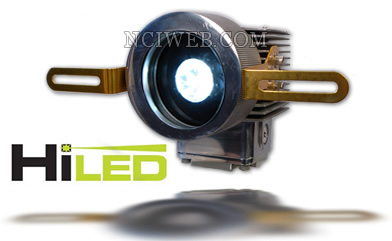 - Verify fixture rating matches area classification
  The Hi-LED Series illuminators offer lower overall cost of ownership than halogen lamps. Longer lamp life, 35,000 – 40,000 hours vs. 1,000 – 2,000 hours for halogen, requires less bulb replacement. This results in savings on lamp costs; cost of labor to replace bulbs; and downtime. Unlike halogen bulbs, Hi-LED lamps have no filament so shock and vibration will not affect lamp life or cause premature failure. Hi-LED lamps do not generate the excessive